
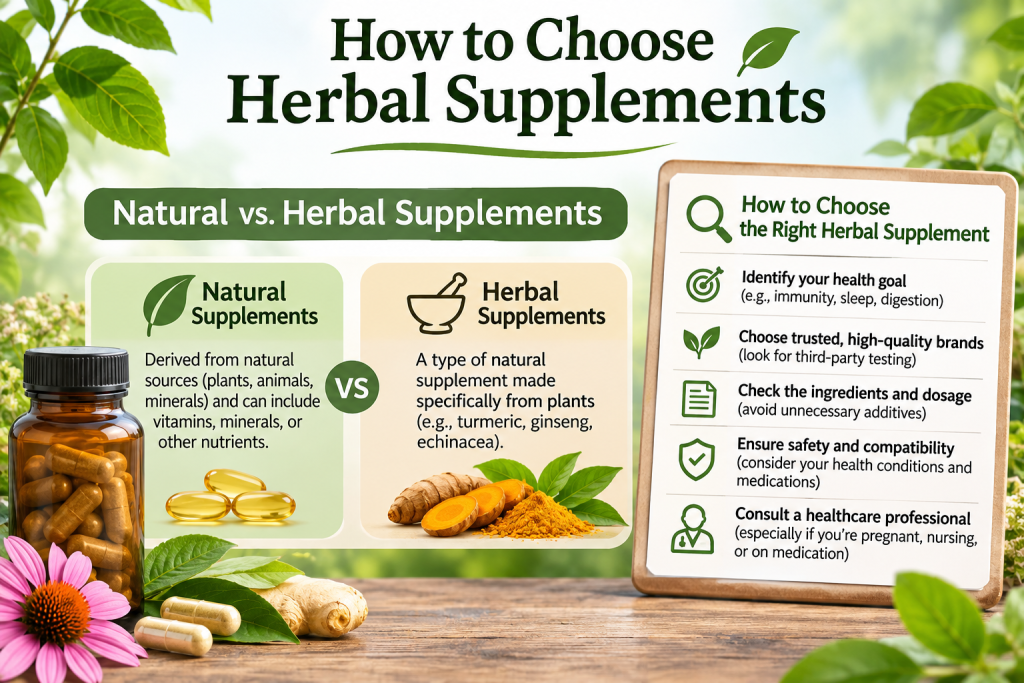
Two bottles can look equally wholesome—one says “natural,” the other says “herbal”—yet contain completely different ingredients, doses, and risks. This guide to natural vs herbal supplements shows you how to read beyond the label, compare the evidence, avoid expensive mistakes, and decide when a supplement is worth discussing with a healthcare professional.
Natural vs Herbal Supplements: What Is the Difference?
Natural supplements is a broad, loosely used description for products marketed as originating from nature, including some vitamins, minerals, oils, and botanicals. Herbal supplements specifically contain herbs or other botanical ingredients. The categories overlap: an herbal product may also be sold as natural, but neither label proves that it is effective, pure, or safe.
The essential distinction in natural vs herbal supplements is therefore not “good versus bad.” It is a question of ingredient identity, purpose, evidence, manufacturing quality, and personal risk. “Natural” is not a clinical safety rating, and an herbal capsule is not automatically gentler than a manufactured vitamin.
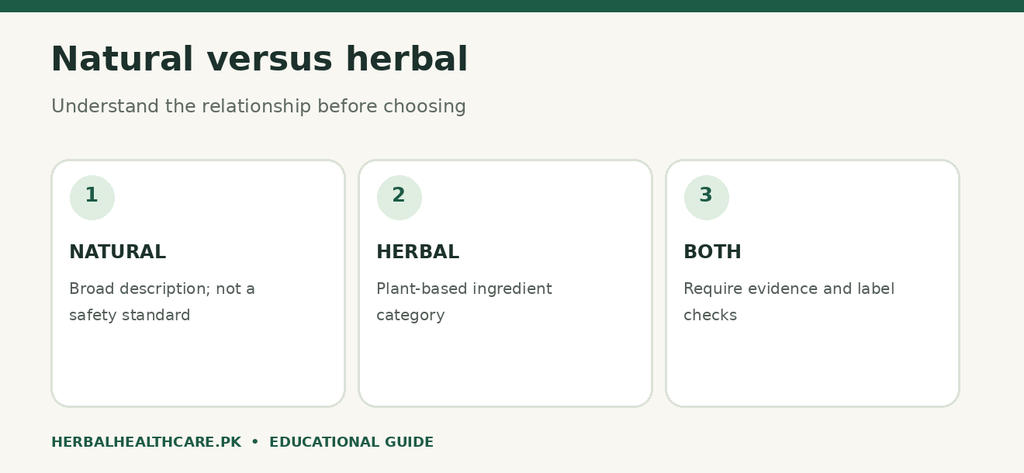
Visual 1. “Natural” describes a broad positioning; “herbal” identifies botanical ingredients. Both call for the same safety checks.
1. What Those Labels Actually Mean
“Natural” is a claim, not a laboratory result
The word natural can describe the source of a compound, the style of a formulation, or a marketing story. A product might contain fish oil, mineral salts, a plant extract, or a vitamin produced through industrial processes, depending on the label and local rules. You cannot reliably infer its chemical structure, purity, manufacturing methods, or quality from the front of the bottle.
For a useful natural vs herbal supplements comparison, turn the package over. Read the complete ingredient list, serving size, amount of each active ingredient, additional substances, manufacturer details, warnings, and any independent quality-testing information. If basic information is missing, that is a reason to pause—not a sign of an artisanal advantage.
“Herbal” means an ingredient comes from a botanical source
Herbal supplements may contain leaves, roots, flowers, seeds, bark, whole-plant powders, or concentrated extracts. A single herb can appear in many forms: tea, capsule, tincture, powder, or standardized extract. These are not interchangeable simply because they share a common name.
A label reading “turmeric” does not tell you whether it contains culinary turmeric powder, a concentrated curcuminoid extract, or a formula with absorption-enhancing ingredients. Those choices can change exposure and the potential for side effects and interactions. The same applies to many botanicals, from ginger to ashwagandha.
Quick comparison table
| Feature | Products marketed as natural | Herbal supplements |
| Meaning | Broad sourcing/marketing description | Contain herbs or botanicals |
| Examples | Certain vitamins, oils, minerals, plant blends | Ginger, peppermint, turmeric, herbal blends |
| Evidence | Depends on the exact ingredient and claim | Depends on plant, extract, dose, and claim |
| Safety | Not assured by “natural” wording | Not assured by plant origin |
| Best first check | Identify the actual active ingredient | Verify botanical species, part, and dose |
Bottom line: In natural vs herbal supplements, the words on the front label tell you much less than the ingredient panel on the back.
2. Benefits: Where Supplements May Help—and Where They Often Disappoint
Supplements can be useful when they address a defined need, but “supports wellness” is too vague to establish value. A diagnosed deficiency, inadequate dietary intake, or a specific clinician-recommended use is a clearer rationale than copying someone else’s daily stack.
Vitamins and minerals: correcting a specific gap
In the natural vs herbal supplements debate, nutrient gaps deserve a specific assessment rather than a guess.
A vitamin or mineral supplement may be appropriate when food intake, absorption, life stage, or a medical condition creates a shortfall. Whether it helps depends on the individual and the nutrient. More is not automatically better: excess amounts of some nutrients can cause harm, and adding several products can lead to duplicated doses.
Ask what the target is: a laboratory-confirmed deficiency, dietary insufficiency, or a guideline-backed need? Then discuss the amount, frequency, duration, and whether follow-up testing is appropriate. Do not use generalized “energy” claims as proof of a nutrient deficiency.
Botanicals: traditional use is a starting point, not a verdict
Herbs have long histories of culinary and traditional use. That history can help researchers identify promising questions, but it is not identical to evidence that a modern concentrated product improves a particular outcome. Clinical research on botanicals is uneven, and findings may differ across preparations.
For example, ginger has been studied for some forms of nausea, but results depend on the setting and population; it is not a substitute for investigating persistent vomiting. Peppermint oil preparations have been researched for selected digestive symptoms, yet concentrated oils require care and are not the same as ordinary peppermint tea.
When comparing natural vs herbal supplements, prioritize a clearly defined outcome over a long list of loosely related promises. A reasonable product description names the actual ingredient and its intended role without claiming to cure serious disease.
💡 Quick Hack: Write your goal in one sentence—“I want to address a clinician-confirmed low vitamin D level,” for example. If a product cannot be linked to that goal with reliable evidence, leave it out of the cart.
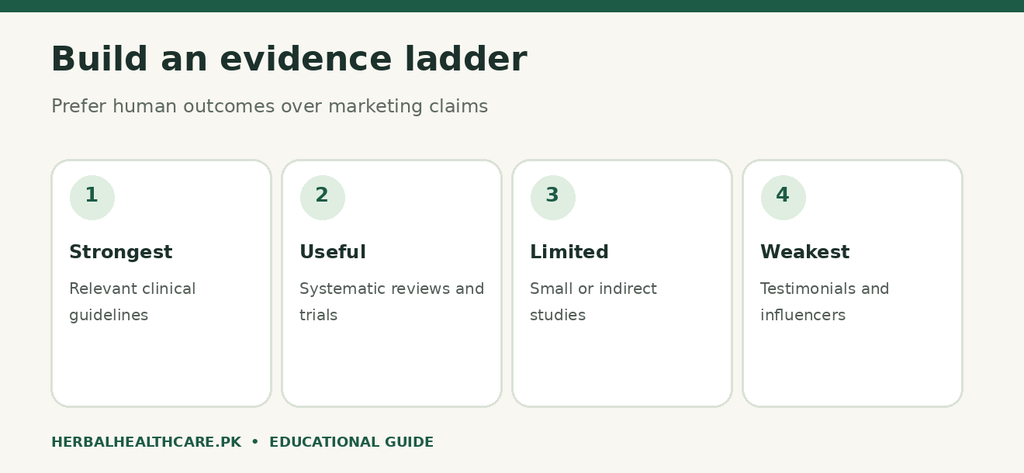
Visual 2. An evidence ladder helps separate clinically useful information from persuasive marketing.
3. What You Need Before Choosing a Supplement
There is no physical toolkit required, but a few inexpensive information tools can prevent costly and risky purchases. Most are free; the hardest step is taking time to use them before buying.
| Tool or material | Approx. cost | Difficulty | Practical purpose |
| Complete product label | Included | Easy | Verify ingredients, amounts, warnings |
| List of medicines and supplements | Free | Easy | Spot possible interactions and duplicate ingredients |
| NIH / FDA information pages | Free online | Easy–moderate | Check evidence and known safety concerns |
| Pharmacist or clinician review | Varies by setting | Easy to arrange | Individualized interaction and risk assessment |
| Price-per-day calculator | Free | Easy | Compare true value of different pack sizes |
| Batch number and manufacturer contact | Included | Easy | Trace product and request test information |
| Symptom and dose diary | Free | Easy | Record start date, effects, and problems |
Costs cannot be estimated universally in PKR because healthcare fees, supplement prices, and availability vary. The most useful budget rule is to avoid paying for several unneeded products while overlooking the reason you wanted one in the first place.
4. Step One: Define the Problem You Are Trying to Solve
Separate symptoms from assumptions
“I feel tired” is an observation, not a diagnosis. Sleep problems, low mood, stress, medications, anemia, infection, and many other causes can overlap. Buying an iron, B12, herbal energy blend, and multivitamin at the same time makes it difficult to know what helped—and can create unnecessary risk.
Start with a simple record: the symptom, when it began, how often it occurs, anything that makes it worse, and any medications already taken. Persistent, worsening, or severe symptoms deserve medical assessment rather than a trial-and-error supplement plan.
Determine whether food or routine can solve part of the problem
Nutrition is usually a better starting point for general well-being than routine supplementation without a clear purpose. Aim for varied foods, adequate calories, protein, produce, and a sustainable daily pattern. Supplements cannot reproduce all the benefits of a varied diet.
💡 Quick Hack: Before comparing bottles, compare your actual weekly food pattern with the nutritional issue you want to address. A small grocery adjustment may be cheaper and more useful than buying a broad “daily wellness” powder.
5. Step Two: Identify the Ingredient Precisely
Read the active ingredient, not just the brand name
For a vitamin product, note the nutrient, amount per serving, chemical form where stated, and percent Daily Value if supplied. For an herb, look for the common name, ideally the scientific name, plant part, extraction ratio or standardization details if relevant, and exact quantity per serving.
“500 mg botanical complex” is not equal to “500 mg of a single identified herb.” A proprietary blend may tell you the total amount without disclosing each component’s contribution. This reduces your ability to judge dose and compare the formula against research.
Beware the misleading power of extracts
An extract can be more concentrated than the raw plant, but “10:1” on a label does not independently establish potency, clinical equivalence, or safety. Extraction solvents and target constituents can differ between products. A concentrated capsule also should not be treated as equivalent to cooking with the same plant.
The technical details matter because two products containing the same named plant may expose you to different levels of active constituents. In natural vs herbal supplements, a precise ingredient specification is a stronger signal than glossy nature imagery.
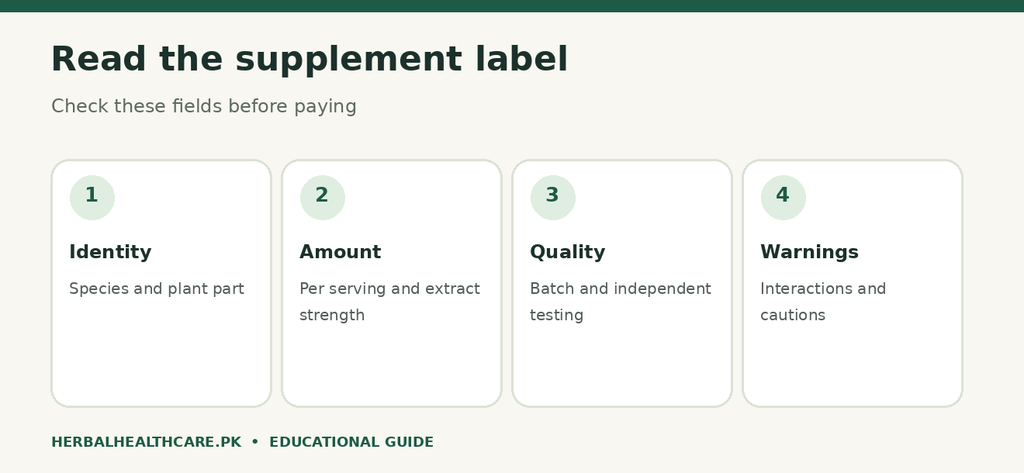
Visual 3. A practical label-reading checklist: identity, dose, quality, and warnings.
6. Step Three: Evaluate Research Without Becoming a Scientist
Match the study to the product and the person
First ask whether the research involved humans rather than only isolated cells or animals. Next check the health outcome, population, dose, form, study length, and how benefits and harms were recorded. A result in a narrow study group may not apply to everyone.
Prefer clinical guidelines, systematic reviews, and well-designed randomized trials over a single small trial. Even a solid trial does not guarantee that a retail product is chemically identical to the tested preparation. A supplement with no meaningful human evidence should not be sold to you as a proven treatment.
Recognize claims that deserve extra scrutiny
“Detoxes your liver” without a specific, measurable medical outcome.
“Balances all hormones” without saying which hormone, in whom, or how.
“Clinically proven” with no accessible citation or product-matched study.
“Zero side effects” or “100% safe for everyone.”
Testimonials that imply a supplement treats cancer, diabetes, or another serious condition.
💡 Quick Hack: Search an ingredient alongside “NIH NCCIH” or “NIH ODS fact sheet” before searching for customer reviews. This usually reveals important uncertainties and cautions faster than promotional content.
7. Step Four: Check Interactions, Health Conditions, and Dose
Use your full medicine list
Make a list that includes prescriptions, over-the-counter medicines, supplements, and occasional remedies. Then bring it to a pharmacist or healthcare professional. The interaction question is not merely “Does this herb work?” but “Could it change how my existing treatment works?”
St. John’s wort is a well-known example of an herb with important medicine interactions, including reduced effectiveness of some medications. Some products may also increase bleeding concerns or affect how the body processes medicines. Do not stop or change prescribed treatments to make room for a supplement.
Some people should seek advice before taking any new product
Extra caution is warranted during pregnancy and breastfeeding, for children, before surgery, and for people with liver or kidney disease, multiple conditions, or complex medication regimens. Research for many products in these groups is limited; “sold over the counter” does not mean appropriate for every life stage.
If a product makes you unwell, stop taking it and contact a healthcare professional. Seek urgent medical help for severe allergic symptoms, difficulty breathing, fainting, chest pain, or other serious symptoms. Keep the packaging in case the ingredients or batch need to be reviewed.
The safety discussion in natural vs herbal supplements should always begin with the individual—not the popularity of the ingredient.
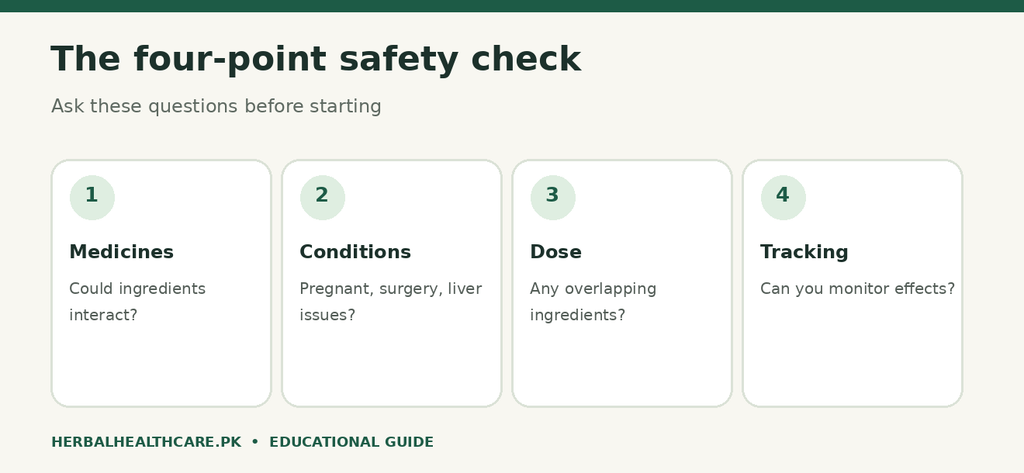
Visual 4. Four safety questions to answer before starting a new supplement.
8. Step Five: Judge Product Quality and Manufacturer Transparency
A reliable natural vs herbal supplements shopping checklist begins with traceability.
Look for traceability and quality controls
At minimum, the package should clearly identify the product, all ingredients, serving size, manufacturer or distributor, expiration information, and batch or lot number. Check for intact packaging and realistic contact details. Avoid products with missing information or untraceable vendors.
Independent testing may add confidence that a product contains what the label says and is screened for specified contaminants. Certification has a defined scope: it cannot prove that the supplement will produce a health benefit. “Tested,” without naming the testing organization or what was tested, deserves a follow-up question.
Understand local rules and imported product claims
Regulation differs by country. U.S. FDA supplement rules are useful educational references, but they are not a substitute for checking the applicable registration and labeling requirements in Pakistan. Be suspicious of sellers who use “FDA approved” as a blanket claim for ordinary dietary supplements; the FDA does not preapprove them for safety and effectiveness.
💡 Quick Hack: Photograph the complete label and save the batch number at purchase. If a recall, quality question, or adverse reaction arises later, you will have the exact product details rather than relying on memory.
In natural vs herbal supplements comparisons, price only matters after ingredient equivalence and safety are checked.
9. Step Six: Compare Price, Dose, and Daily Value
Price per bottle is rarely the right comparison
Suppose Bottle A costs PKR 2,400 for 60 capsules and suggests two capsules daily. It provides 30 days of use, or PKR 80 per day. Bottle B costs PKR 1,800 for 30 capsules at one capsule daily, or PKR 60 per day. The second bottle is cheaper per day—provided the ingredients, amounts, and quality are actually comparable.
That final condition is important. A high-dose extract and ordinary powdered herb are not interchangeable merely because one lists more milligrams. Compare like with like, and never increase dose just to improve the apparent value of a purchase.
💡 Quick Hack: Calculate price ÷ days supplied, then cross-check ingredient quantity and product quality. Skip “buy three, get one free” promotions for a product you have never safely tried or do not need.
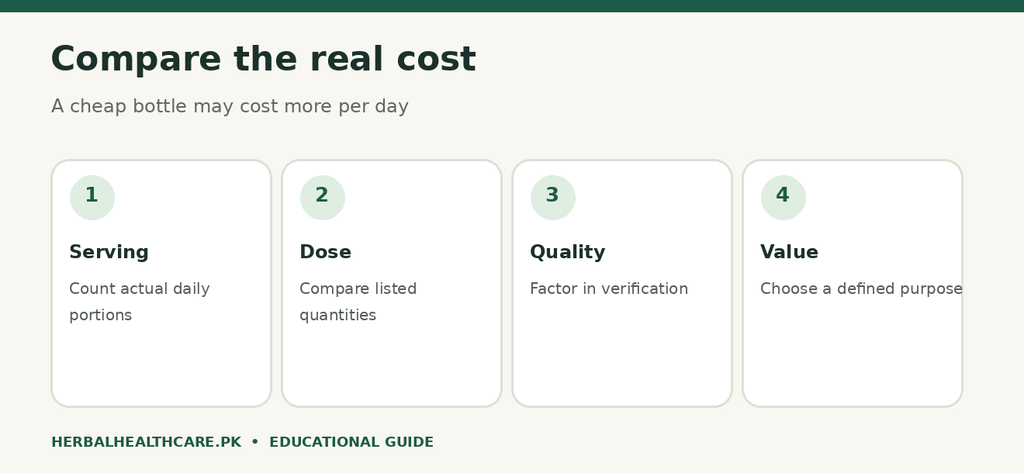
Visual 5. Calculate actual daily cost, then judge whether the dose, research, and verification justify that price.
10. Step Seven: Create a Safe Trial and Monitoring Plan
If your clinician agrees a product is appropriate, write down why you are using it, the intended schedule, what benefit you reasonably expect, what side effects to watch for, and when to reassess. Follow the professional plan or label instructions; do not invent a personal mega-dose based on influencer stories.
Avoid adding several new products at once because that makes it harder to identify a reaction. Monitor the outcome that matters rather than an undefined sense that something is “working.” If a product offers no meaningful benefit, discuss whether it should be continued instead of letting it turn into a permanent subscription.
Good tracking can be simple: start date, product and lot number, dose, symptoms, adverse effects, and follow-up decision. Keep the record with your medication list so future doctors and pharmacists can see what you are using.
11. Five Critical Mistakes Beginners Make
Mistake 1: Treating natural as a synonym for harmless
Plants contain biologically active compounds, and some can be toxic or interact with medications. Prevent this error by treating every supplement as a product that requires its own ingredient, dose, and safety review.
Mistake 2: Buying a vague multi-ingredient blend
Complex blends can conceal how much of each herb is present and complicate interaction checks. A clearly labeled, purpose-specific product is often easier to assess than a formula claiming benefits for ten unrelated problems.
Mistake 3: Assuming higher doses work faster
The body does not always respond better to more of a substance. Too much can create toxicity, digestive distress, or avoidable interactions. Never use the label’s maximum as a target; follow individualized advice.
Mistake 4: Ignoring prescriptions and planned procedures
Someone may be careful about ingredients yet forget to mention a herbal product before surgery or alongside a long-term medicine. Keep one current medication-and-supplement list and share it at every relevant appointment.
Mistake 5: Trusting star ratings over clinical evidence
Reviews can help assess shipping or customer service; they do not establish that an ingredient treats a condition. Ask for relevant human evidence and transparent manufacturing before using popularity as a tiebreaker.
12. Advanced Tips for Smarter Buying
Use a three-question decision filter
Ask: “What exact problem am I addressing?”, “What reliable evidence supports this exact ingredient and form?”, and “What personal risks could change the decision?” If you cannot answer all three, do not rush to purchase.
Distinguish standardization from proof of clinical efficacy
Some herbal extracts specify a percentage of a marker compound. That can help describe the product, but a consistent marker level does not prove that the supplement works, is free of contaminants, or matches a successful clinical trial. Ask whether standardization applies to the ingredient relevant to the claimed benefit.
Avoid expensive routine stacks without a measured purpose
A multivitamin, greens powder, collagen blend, sleep gummy, and multiple botanical capsules can add up to a substantial monthly bill. Their ingredients may overlap, and the evidence supporting each promised benefit may be weak. Review your cupboard twice a year and remove products with no clear purpose after discussing changes with your clinician.
💡 Quick Hack: For each purchase, give it a “reason, evidence, risk, cost” score in your notes. Products that fail on any one essential category should trigger more research—not an impulse buy.
Think beyond the supplement aisle
A meaningful improvement in sleep routine, food access, activity, or proper medical assessment may provide more value than the fifth supplement in a daily regimen. Supplements should fill a reasonable gap, not become a substitute for basic health care.
13. Troubleshooting: What If Something Goes Wrong?
You develop nausea, rash, dizziness, or unexpected symptoms
Stop the suspected supplement and contact a qualified healthcare professional, especially if symptoms are persistent or concerning. For serious symptoms, seek urgent care. Record when the symptoms began, the amount taken, other medicines used, and the package information so a professional can evaluate potential causes.
You discover two products contain the same active ingredient
Do not assume duplication is harmless. Compare the amounts per serving, how often you take them, and whether the ingredient has a known upper limit. Ask a pharmacist or clinician to review the combined total rather than deciding based on bottle names.
The seller cannot explain the ingredient or produce a full label
Do not buy until the information is available and credible. An attractive marketing page is not a replacement for an accurate ingredient declaration, batch identification, and manufacturer contact. If a product’s claimed certifications cannot be independently verified, treat them as unconfirmed.
You see no improvement after a reasonable review point
Revisit the goal and the evidence; do not automatically double the dose. A product may be ineffective for that outcome, or the underlying issue may need medical assessment. A defined reassessment date helps prevent indefinite spending.
You are preparing for surgery or become pregnant
Contact your healthcare team promptly with a full supplement list. Products that seemed routine may require reassessment because their safety has not been established for these circumstances or because they may affect procedures and medications.
Storage and ongoing maintenance
Keep supplements in their original containers, follow their storage directions, and check dates and seals. Protect them from heat, moisture, and children. Review your full list whenever medications change, a new diagnosis arises, or a healthcare professional recommends a new treatment.
The best long-term answer to natural vs herbal supplements is not a universal winner. It is a careful, revisable choice based on the exact product and your current health situation.
14. Frequently Asked Questions
Are herbal supplements always natural?
Herbal products contain botanical ingredients and are commonly marketed as natural, but they may also include added excipients, extracts, or other manufactured components. The label should explain what is actually in the finished product. “Natural” alone says little about processing or purity.
Are natural supplements safer than synthetic vitamins?
Not automatically. Safety depends on the specific substance, dose, formulation, quality, health condition, and interactions. A chemically identical nutrient may function similarly regardless of its source, while contaminated or overly concentrated products can introduce avoidable risks.
Can I take herbs and vitamins together?
Sometimes, but combinations can create duplicate ingredients or interactions with each other and with medicines. Ask a pharmacist or healthcare professional to evaluate the actual products and amounts, especially if you take prescriptions or manage a health condition.
Which herbal supplement is best for immunity?
No single herb has been established as the best immune supplement for everyone. “Boost immunity” is an imprecise marketing claim. Work on nutrition, vaccination where appropriate, sleep, and underlying medical issues, and assess any specific supplement using condition-specific evidence.
How can I tell whether an herbal supplement is high quality?
Look for a full ingredient panel, exact dose, identified botanical components, relevant cautions, manufacturer and batch details, and credible independent quality verification where available. Even a well-tested product still needs a separate check for efficacy and personal safety.
Is a herbal tea equivalent to a herbal capsule?
Usually not. Tea brewing, plant material, extraction methods, and capsule concentration can produce different amounts of active compounds. Do not convert between them by guessing or assume that because a beverage is familiar, a high-strength extract carries the same risks.
15. Final Verdict: Choose Evidence, Not Packaging
The useful lesson from natural vs herbal supplements is straightforward: the broad word “natural” and the more specific word “herbal” do not establish which product is better. A sensible choice starts with a real need, a precisely identified ingredient, evidence relevant to that need, quality controls, and a personal safety check.
Before your next purchase, use the label checklist in this guide and bring your medicine list to a qualified professional if interactions or medical conditions are involved. Explore more ingredient explainers and safety resources on