
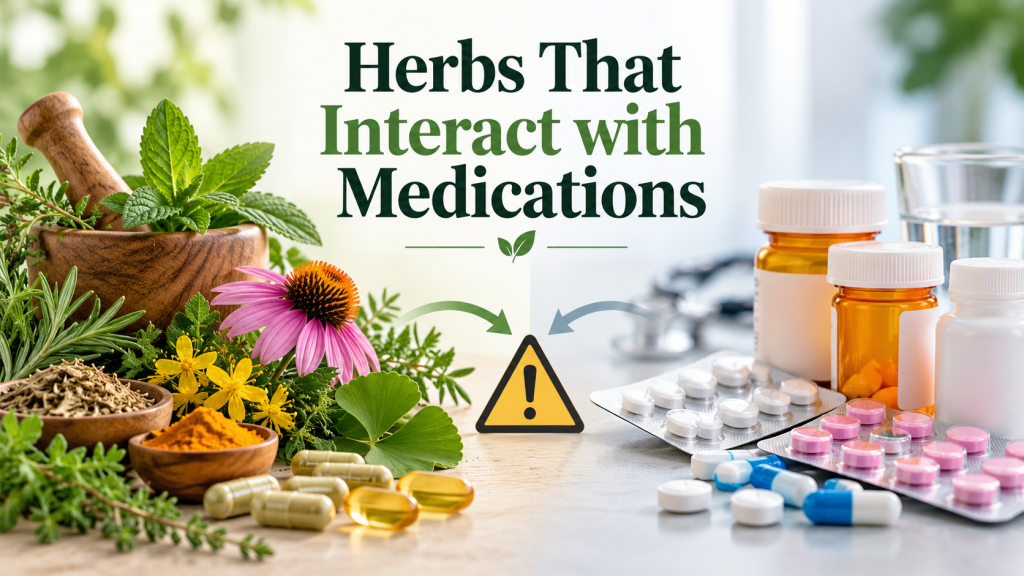
A capsule marked “natural” can still change how a prescription works. Some herbs that interact with medications can weaken vital treatment, while others may amplify side effects; this guide explains ten combinations worth checking, how to screen a supplement label, and when a pharmacist or doctor needs to step in.
The goal is not to dismiss traditional herbal products. It is to make their use more transparent and safer—especially for anyone taking blood thinners, antidepressants, diabetes medicines, transplant medicines, or heart drugs. Interaction evidence varies: some combinations are well documented, while others deserve caution because clinical data remain limited.
Quick Answer: Which Herbs Can Interact With Medicines?
St. John’s wort, goldenseal, ginkgo, garlic supplements, ginseng, concentrated green tea extract, licorice root, kava, turmeric extracts, and certain sedative herbs can interact with medicines. Effects may include bleeding, altered drug levels, excess sedation, or unstable blood pressure. Check the exact product with a pharmacist before use.
Figure 1. Herbal products and prescription medicines should be reviewed together, not as two separate routines.
Why Herb–Drug Interactions Happen
Understanding herbs that interact with medications begins with distinguishing changed drug exposure from an additive physical effect.
A drug interaction is not necessarily a dramatic reaction after swallowing two products. It can be a quieter change in how much medicine gets into the bloodstream, how fast the liver breaks it down, or whether two substances push the same body system in one direction. That makes prevention more reliable than waiting for symptoms.
Three mechanisms matter most. A pharmacokinetic interaction changes absorption, distribution, metabolism, or elimination; for example, St. John’s wort can activate drug-metabolizing enzymes and transporters. A pharmacodynamic interaction changes the total physiological effect—for example, two agents may both encourage bleeding. A third problem is product variability: extracts, doses, and mixed formulas differ widely.
“Natural” is not a measure of safety. Food-sized servings of garlic or turmeric are not equivalent to concentrated capsules, and a cup of brewed tea is not automatically comparable to a standardized extract. The ingredient name, strength, form, frequency, and medical context all matter. See the FDA’s advice on mixing supplements and medicines in the reference section.
Essential Tools and Materials: A Practical Safety Kit
Unlike a DIY project, the useful “tools” here are accurate labels, a medication list, and a qualified reviewer. Prices are illustrative zero-to-low-cost estimates, not retail quotations; consultation charges vary by provider and city in Pakistan.
| Tool or material | Approx. cost | Skill level | What it does |
| All medicine packages / photos | No extra cost | Easy | Shows exact brand, strength and directions |
| Herbal bottle and ingredient panel | No extra cost | Easy | Identifies extract dose, blends and warnings |
| Written medicines + supplements list | Free | Easy | Prevents omitted OTC products |
| Pharmacy review / physician visit | Varies by provider | Professional | Evaluates individual interaction risk |
| INR, glucose or other ordered tests | Varies by lab | Clinical | Checks selected risk when medically indicated |
| Phone reminder and symptom notes | Free | Easy | Tracks changes and follow-up questions |
💡 Quick Hack: Photograph the front and back of every herbal product. A picture often captures small-print ingredients that are missing from a handwritten list, and it makes a pharmacist review much faster.
10 Herb and Medication Combinations Worth Checking
1. St. John’s Wort + Antidepressants: Serotonin Risk
Among herbs that interact with medications, St. John’s wort has particularly strong evidence for major interactions.
St. John’s wort is sold for mood symptoms, but it is among the best-documented sources of clinically important drug interactions. Combined with certain antidepressants—particularly medicines that raise serotonin—it may increase serotonin-related adverse effects. Severe serotonin toxicity requires urgent evaluation.
Potential clues include agitation, sweating, tremor, diarrhea, fever, and increasing muscle stiffness; symptoms alone cannot identify the cause. St. John’s wort can also lower exposure to many unrelated medicines by inducing liver enzymes and the intestinal drug transporter P-glycoprotein. That second mechanism can reduce treatment effectiveness even without immediate symptoms.
Action: Do not add St. John’s wort to an antidepressant or stop it abruptly while taking a critical medicine without prescriber guidance. Ask a pharmacist to review the entire regimen, including birth control, transplant drugs, and antiviral treatments. Source: NIH NCCIH herb–drug interaction guidance.
2. St. John’s Wort + Oral Contraceptives or Transplant Medicines
This is a different danger involving the same herb. St. John’s wort may reduce concentrations of some hormonal contraceptives, increasing the risk of contraceptive failure; it can also dangerously reduce exposure to transplant medicines such as cyclosporine. Reduced levels may be silent until a serious clinical consequence appears.
A person taking an anti-rejection drug should treat any proposed herbal supplement as a medication change requiring approval by the transplant team. Someone relying on hormonal contraception should consult a clinician about interaction management and reliable alternatives rather than guessing how long an effect might last.
Action: Provide the exact St. John’s wort product, dose, and start or stop dates to the treating clinician. Do not assume that taking the herb several hours apart will solve this metabolic interaction.
3. Ginkgo Biloba + Warfarin or Other Blood Thinners
Lists of herbs that interact with medications often include ginkgo because blood-thinner safety is clinically important.
Ginkgo leaf extract is frequently marketed for memory and circulation. It may increase bleeding risk in people taking anticoagulants such as warfarin, although the size of this risk varies across studies and formulations. A supplement may matter even when it has never caused obvious bleeding on its own.
Warning signs that need prompt clinical attention include unexplained large bruises, nosebleeds that do not stop, blood in urine, and black or bloody stools. Do not discontinue prescribed anticoagulation yourself. A pharmacist or anticoagulation clinic may recommend closer monitoring or avoiding the supplement.
Action: Record the bottle’s standardized extract information and notify your anticoagulation clinician before starting or stopping ginkgo. Sources: NCCIH clinical digest and UC San Diego anticoagulation guidance.
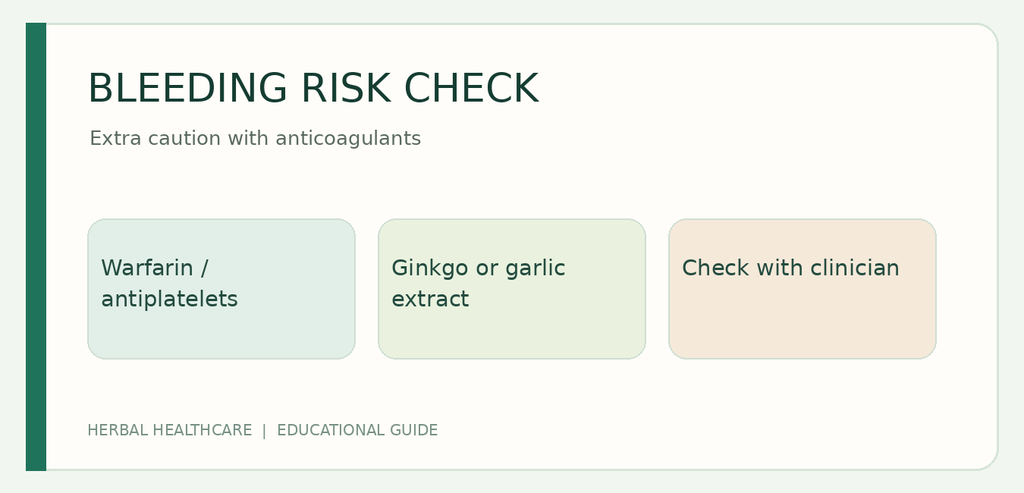
Figure 2. A clear medication review checks bleeding risk, prescribed anticoagulants, and supplement formulations.
4. Concentrated Garlic Supplements + Anticoagulants
Garlic used as a normal cooking ingredient is different from high-dose garlic extract tablets or oils. Concentrated garlic products have antiplatelet effects and may add to the bleeding risk of blood thinners; the clinical evidence is mixed, so the sensible response is a case-by-case review rather than a universal claim of harm.
The distinction is especially important before procedures, when a surgeon needs to know everything a patient uses. Bleeding concerns also arise with medicines such as aspirin or clopidogrel, though risks depend on the circumstances and prescribed doses.
Action: Keep eating an ordinary balanced diet unless your clinician says otherwise, but do not begin “heart health” garlic capsules without checking for anticoagulant or antiplatelet medicines. Ask the surgical team about its specific pre-operative instructions.
5. Goldenseal + Metformin: Reduced Diabetes Drug Exposure
Goldenseal demonstrates why herbs that interact with medications can weaken therapy without causing immediate discomfort.
Goldenseal is often sold in immune-support and digestive-health blends. A controlled study summarized by NCCIH found that taking goldenseal extract with metformin reduced metformin exposure by approximately 25% in healthy volunteers. The clinical effect in each patient may differ, but this is a meaningful reason to avoid casually combining the two.
Reduced exposure could undermine glucose management over time without producing an immediate dramatic symptom. It is not safe to compensate by taking extra metformin, extra goldenseal, or an unplanned additional dose. Blood-glucose readings should be interpreted within the treatment plan prescribed for the patient.
Action: If metformin and goldenseal are already being used together, contact the prescribing clinician or pharmacist with the exact product information and glucose log. Source: NCCIH goldenseal safety facts.
6. Concentrated Green Tea Extract + Nadolol or Atorvastatin
Concentrated extracts belong on checklists of herbs that interact with medications even when everyday beverages are not equivalent.
Green tea as a beverage and concentrated green tea capsules are not interchangeable. Research cited by NCCIH reports that concentrated green tea preparations can lower blood levels of certain medicines, including nadolol and atorvastatin. Not every beta-blocker or statin behaves the same way, and the size of an interaction depends on product and dose.
A person may not notice a fall in medication exposure immediately. With a beta-blocker, subtle changes in measured heart rate or blood pressure might prompt a review; with a statin, blood tests and longer-term clinical goals matter more than how someone feels after one dose.
Action: Check product labels for “green tea extract,” EGCG, or concentrated catechins. Bring the bottle to the pharmacist rather than assuming an herbal “detox” formula is harmless alongside cardiovascular medicine.
7. Licorice Root + Blood Pressure Medicines or Digoxin
Licorice containing glycyrrhizin can cause sodium retention, potassium loss, and elevated blood pressure when consumed in sufficient amounts. That makes concentrated licorice root products especially concerning for people using blood-pressure drugs, diuretics, or digoxin. Low potassium can also increase susceptibility to certain heart rhythm problems.
Not every candy labeled licorice contains real licorice root; conversely, some herbal teas and tonic mixtures do. Products labeled deglycyrrhizinated licorice (DGL) are different but are not automatically free of all drug interactions or other safety questions.
Action: If you have hypertension, heart disease, kidney disease, or use a diuretic or digoxin, ask a clinician before using medicinal licorice. Do not try to self-correct suspected low potassium with supplements without medical advice.
8. Asian or American Ginseng + Warfarin or Diabetes Treatment
Ginseng is not a single uniform extract. Asian ginseng and American ginseng differ, and studies about interactions with warfarin are mixed; some have reported reduced anticoagulant effect with certain preparations. Ginseng may also alter glucose control, which matters when combined with diabetes medicines.
The key lesson is not that every ginseng product causes bleeding or hypoglycemia. It is that the botanical identity, extraction method, and prescription regimen determine whether close attention is warranted. Warfarin is particularly sensitive to changes in supplements, diet, and concurrent drugs.
Action: Avoid switching between ginseng brands without review. If the patient is on warfarin, ask the anticoagulation service whether INR checks are needed after any herbal change.
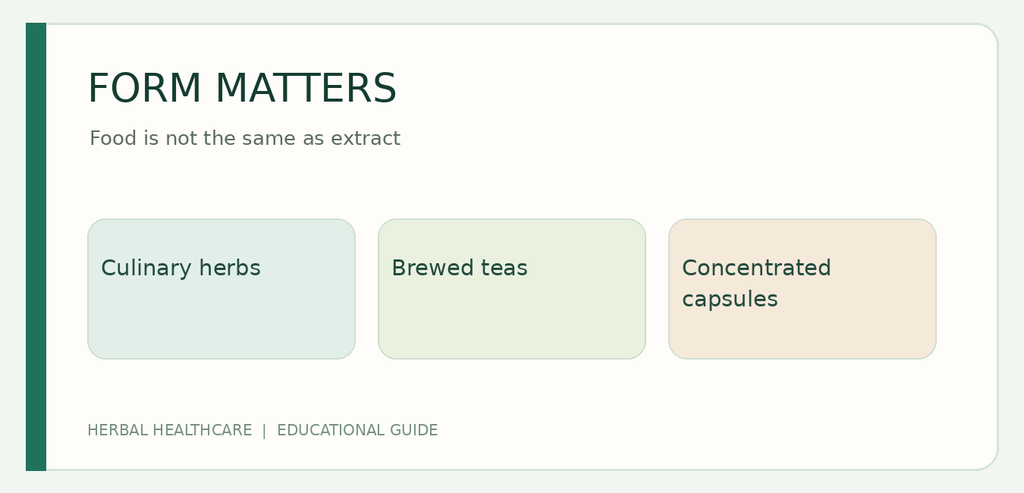
Figure 3. Concentrated extracts, herbal teas, and ordinary food portions are not equivalent exposures.
9. Kava + Sedatives, Alcohol, or Certain Anxiety Medicines
Kava is promoted for relaxation, but it has been associated with serious liver injury in some cases and can add to the sedating effects of medicines. This is particularly relevant with benzodiazepines, sleeping pills, and other medicines that impair alertness. Combining sedating substances can affect judgment, coordination, and the ability to drive safely.
The safest question to ask is not “how many hours apart should I take them?” but whether the combination is appropriate at all. Liver disease, alcohol use, and multiple sedatives increase the need for individualized advice. Do not abruptly stop a prescribed sedative because a supplement seems to overlap with it.
Action: Discuss kava with the prescriber before using it. Seek medical care promptly for concerning symptoms such as marked drowsiness, breathing difficulty, jaundice, or dark urine.
10. Turmeric or Curcumin Extracts + Blood Thinners
Turmeric is a familiar cooking spice, but high-strength curcumin formulations—sometimes blended with piperine to enhance absorption—create different exposure levels. Potential effects on bleeding, drug metabolism, and formulation-specific absorption justify medication screening, especially for people on anticoagulants or antiplatelet agents. Evidence varies; it is misleading to claim every turmeric meal is dangerous.
Some concentrated turmeric or curcumin supplements have also been associated with liver injury, particularly enhanced-bioavailability products. A person with liver disease or unexplained jaundice should avoid self-prescribing concentrated extracts and discuss any product use with a clinician.
Action: Distinguish culinary turmeric from an extract by checking milligrams per serving, standardized curcuminoid content, and piperine or black pepper extract. Ask for professional advice before pairing concentrated products with high-risk medicines.
How to Screen Any Herbal Product Before the First Dose
For households managing several prescriptions, a simple register of herbs that interact with medications is more useful than memory.
A reliable method for identifying herbs that interact with medications is to review the actual combination rather than searching for a general “safe herbs” list. The following workflow can be completed in under one pharmacy visit once the relevant details are assembled.
Create a complete medicine inventory
Write each prescription by its exact name, strength, dose, and time taken. Include medicines used only as needed.
Add over-the-counter painkillers, cold remedies, antacids, and vitamins. Aspirin and ibuprofen can be particularly relevant to bleeding-risk questions.
Include every herb, powder, tonic, tea, imported blend, traditional preparation, and supplement. Record the package ingredients rather than relying on the product’s marketing name.
List important conditions such as kidney disease, liver disease, pregnancy, planned surgery, or prior bleeding episodes. Share this information privately with a licensed professional.
💡 Quick Hack: Keep a “last updated” date on the medicine list and save one photo of it on your phone. This can prevent omissions when seeing a different doctor or traveling.
Identify the exact botanical, form, and dose
Look for the Latin botanical name, plant part, extract ratio, standardized marker, milligrams per capsule, and daily serving. A label that says “proprietary herbal blend” without amounts deserves extra scrutiny. If the manufacturer cannot identify the ingredients, a professional cannot reliably rule out an interaction.
Different forms are not equivalent. Brewed tea, tincture, capsule, topical cream, and standardized extract may deliver substantially different amounts of active components. Check for additional ingredients like caffeine, piperine, minerals, or other herbs that change the risk profile.
Sort the medicines by risk level
Some prescriptions have a narrow therapeutic index: a small change in drug exposure can have large consequences. Examples include warfarin, digoxin, and some transplant medicines. These products deserve professional review before adding any herbal supplement, even when the herb is perceived as mild.
Also flag antidepressants, diabetes drugs, sedatives, epilepsy medicines, HIV treatments, and medicines for heart rhythm problems. Do not use this list to declare a product compatible with everything else; it simply prioritizes where a review matters most.
Check trusted resources—not just store testimonials
The NIH National Center for Complementary and Integrative Health provides concise herb-specific summaries. The FDA explains why supplements can affect prescription treatment. Professional drug-interaction databases available to pharmacists can evaluate the exact medicine names and products more reliably than a generic online list.
Use sources to prepare questions, not to change a dose on your own. An interaction checker can miss novel or poorly studied ingredients, and an absence of published warnings does not guarantee safety.
💡 Quick Hack: Copy the complete ingredients panel into the message you send to a pharmacist. “Is this safe?” without a formulation or strength often cannot be answered responsibly.
Decide, document, and set a follow-up
The best outcome may be to avoid the herb, choose a different product, adjust monitoring under clinical supervision, or proceed after a qualified review. The choice depends on the potential benefit of the supplement, the severity of the interaction, availability of alternatives, and the patient’s medical risks.
Document the reviewer’s advice and when to seek help. If a change to a critical medicine requires INR, blood glucose, blood pressure, drug concentration, or liver testing, arrange those tests through the treating clinician. Never invent a monitoring schedule based solely on a blog article.
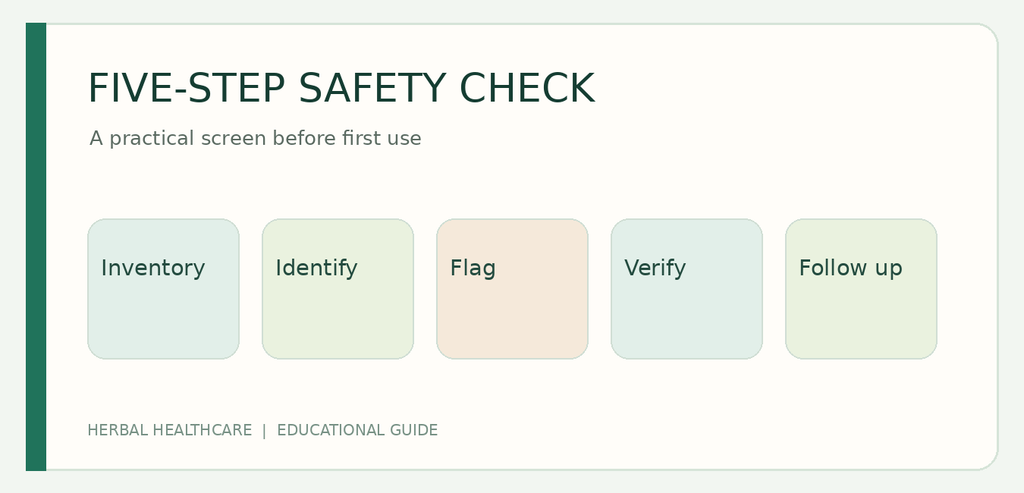
Figure 4. Use the five-step screening process before taking a new herbal capsule, powder, or tea.
Five Common Mistakes That Raise Interaction Risk
A common error when evaluating herbs that interact with medications is focusing on ingredients while overlooking dose and formulation.
Mistake 1: Assuming “natural” means harmless
Natural ingredients can be pharmacologically active. A highly concentrated extract may have enough biological effect to change drug levels or increase bleeding risk. Prevent the mistake by applying the same medication-review process to herbal supplements that you would to any new over-the-counter medicine.
Mistake 2: Telling the doctor only about prescriptions
People frequently forget teas, wellness powders, weight-loss formulas, and products used intermittently. An incomplete list gives a false impression that a regimen is safe. Bring physical packaging or clear label photographs, especially if the name is in Urdu or another language.
Mistake 3: Believing dose spacing always prevents interactions
Taking one product in the morning and another at night may help certain absorption interactions, but it cannot reliably stop enzyme induction, bleeding effects, or additive sedation. Prevention depends on the interaction mechanism. Ask for evidence before relying on a “two-hour rule.”
Mistake 4: Stopping prescription medicine to keep taking an herb
Suddenly stopping antidepressants, heart drugs, diabetes medicines, seizure medicines, or anticoagulants can create serious hazards. A supplement should not displace proven treatment without a clinician-led plan. If symptoms suggest a severe reaction, seek urgent medical help and tell the team what was taken.
Mistake 5: Changing several products at once
Starting a new herbal blend, changing a prescription dose, and adding a new vitamin in the same week makes problems harder to trace. Clinicians may recommend a simpler plan that changes one non-urgent variable at a time, while preserving medically necessary treatment.
Advanced Tips for Safer Long-Term Herbal Use
These next-level practices help readers who are regularly prescribed medicines or care for a relative managing several conditions. None replaces professional medical judgment; their value lies in keeping the record accurate and catching avoidable surprises.
💡 Quick Hack: Add the reason for taking each supplement beside its name: “sleep,” “digestion,” or “energy.” During review, a pharmacist may suggest a lower-risk, evidence-based way to address that goal without adding another interacting ingredient.
Compare products by active ingredients, not brand promises
“Immune defense,” “detox,” “blood purifier,” and “metabolism booster” are marketing categories, not precise compositions. Two products sold for the same purpose may contain very different herbs. Compare their ingredient lists, extract concentrations, and manufacturer quality information.
Treat every start, stop, or brand switch as a change
An interaction can occur not only when introducing a product, but when stopping it. For example, enzyme-inducing St. John’s wort may lower certain medicine levels during use; after discontinuation, those levels may rise toward baseline over time. The prescriber needs to know about both directions of the change.
Build a higher-alert review process before procedures
Before dental surgery, childbirth, anesthesia, or an invasive procedure, hand the clinical team the complete list of herbs and supplements. Recommendations on when or whether to stop a supplement depend on the product and procedure. Follow the treating team’s instructions rather than a universal online cutoff.
💡 Quick Hack: When buying herbal products in Pakistan, ask for a clear manufacturer name, batch number, expiry date, sealed packaging, and full ingredient disclosure. These checks do not prove efficacy or safety, but they improve traceability if a problem occurs.
When Evidence Is Limited, Say So
Some online lists imply that every theoretical laboratory interaction occurs in patients. In reality, an enzyme effect observed in a test tube may never be clinically important at normal doses. Other interactions, such as several involving St. John’s wort, have stronger human evidence and documented consequences.
A practical risk decision asks four questions: Is the interaction supported by human research? Is the prescription particularly sensitive to small changes? Is the supplement highly concentrated? And how severe would the possible consequence be? This avoids both complacency and unnecessary alarm.
Troubleshooting: What to Do If a Combination May Be Causing Problems
Warning symptoms linked to herbs that interact with medications may be subtle, delayed, or absent despite changes in drug exposure.
If you have unusual bleeding or bruising
Report new or unexplained bruising promptly if taking an anticoagulant or antiplatelet medicine, especially after adding a supplement. Heavy bleeding, black stools, vomiting blood, severe headache, weakness on one side, or fainting need emergency assessment. Tell emergency clinicians every medicine and herb taken; do not self-treat by skipping prescribed doses.
If you feel agitated, feverish, shaky, or confused
These symptoms may have many causes, but with an antidepressant plus a serotonin-active herb, clinicians must consider serotonin toxicity. If fever, muscle rigidity, marked confusion, or rapidly worsening symptoms occur, seek emergency care. Do not drive yourself when severely unwell.
If blood pressure or blood sugar becomes unstable
Record actual measurements, symptoms, and any recent product changes. High or low readings can have multiple causes, including illness and missed medicine doses. Follow your existing personalized medical action plan and contact your treating clinician, especially when symptoms are present or readings remain outside the targets they set.
If you discover an interaction but feel completely fine
A lack of symptoms does not rule out reduced medication effectiveness. Contact a pharmacist or prescribing clinician and ask whether product discontinuation, monitoring, or follow-up is indicated. This is particularly urgent when the affected medicine prevents transplant rejection, blood clots, seizures, or unintended pregnancy.
If a product has an incomplete label
Do not guess the ingredients or rely on social media claims. Contact the seller for full botanical names and quantities; if credible information is unavailable, consider not using the product. Keep the purchase record and package in case a clinician needs to investigate an adverse effect.
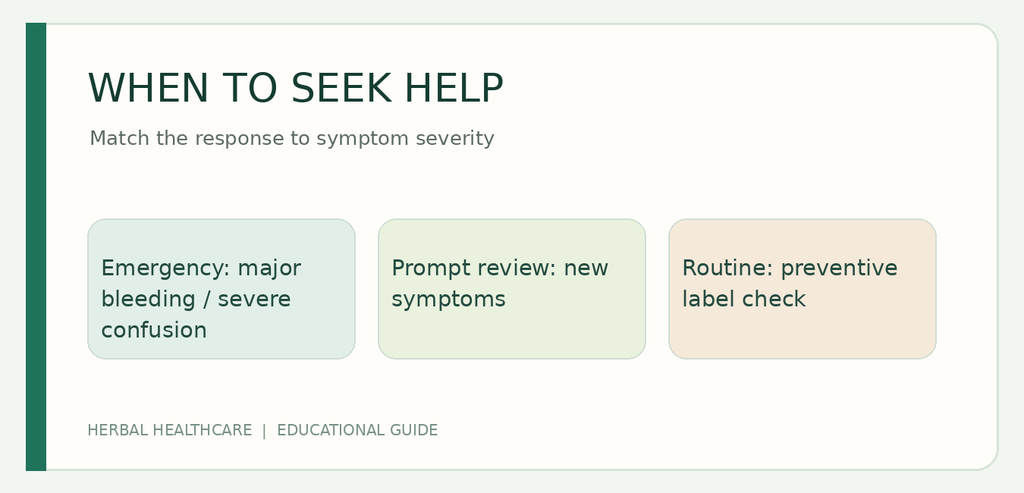
Figure 5. Emergency symptoms and routine follow-up questions should be handled at different levels of urgency.
Maintenance: A Simple Monthly Safety Review
Once a month, compare your current medicine list against what is actually in the home medicine cabinet.
Remove expired or unidentifiable products from active use and follow local safe-disposal advice.
Check whether any dose, brand, or ingredient list changed since the last pharmacist review.
Ask whether the supplement still serves a clear goal and whether its expected benefit outweighs cost and uncertainty.
Update clinicians about new diagnoses, pregnancy, planned surgery, hospital discharge medicines, or abnormal monitoring results.
Pro-Tip: Add a recurring reminder labeled “medicine and supplement review” to your phone, especially if you support an older family member using many products. Consistency is more valuable than collecting an enormous folder of screenshots.
Frequently Asked Questions
Readers researching herbs that interact with medications should check reliable clinical resources for each specific combination.
1. Can I take herbal supplements while using prescription medicine?
Sometimes, but the answer depends on the exact herbal product, prescription medicine, dose, and health conditions. There is no reliable one-size-fits-all “yes.” Before starting a supplement, ask a pharmacist or prescribing clinician to screen the full ingredient panel for known and plausible interactions.
2. Which herbs are most concerning with warfarin?
St. John’s wort, ginkgo, concentrated garlic products, and some ginseng preparations are among the herbs commonly flagged for review. Their effects are not identical, and the quality of human evidence varies. If you take warfarin, discuss starting or stopping botanicals with the anticoagulation clinic and follow its INR monitoring instructions.
3. Can herbal tea interact with medication?
Yes, depending on the plant, concentration, amount consumed, and drug involved. A mild culinary infusion is often a different exposure from concentrated tea extract, but the phrase “herbal tea” alone does not prove safety. Review the named ingredients, especially in multi-herb sleep, detox, and weight-control blends.
4. How long should I wait between herbs and prescribed tablets?
There is no universal safe interval. Spacing may help in selected absorption-related interactions, but enzyme and transporter changes can persist beyond a single dose, while bleeding or sedative effects may overlap for many hours. Ask a pharmacist for instructions specific to the two products instead of adopting a generic two-hour gap.
5. Should I stop an herbal supplement before surgery?
Tell the surgeon and anesthetist about every herb you use as early as possible. Some products can affect bleeding, sedation, heart rate, or anesthesia. The surgical team should specify whether and when a product should be paused; stopping a prescription medicine without guidance can be more dangerous than the supplement itself.
6. What should I do if I accidentally mixed a risky combination?
Do not panic or take extra doses to “balance” the interaction. Write down the product names, strengths, times taken, and symptoms. Contact a clinician or pharmacist promptly; seek emergency care for severe bleeding, trouble breathing, fainting, seizures, or rapidly worsening confusion. If a prescribed medicine is involved, do not stop it without professional advice unless directed in an emergency.
Conclusion: Make Every Herbal Choice an Informed One
The most important principle about herbs that interact with medications is simple: identify the actual ingredients, check the prescribed regimen, and involve a qualified professional when the combination is uncertain. St. John’s wort and goldenseal deserve particular attention because meaningful interactions are documented; blood thinners, transplant medicines, and other high-risk therapies require extra care.
For more plain-language herbal wellness education, visit HerbalHealthcare.pk. This resource is educational and cannot diagnose, replace treatment, or determine whether a particular supplement is safe for you. What herbal product would you like us to explain in a future evidence-based safety guide?