
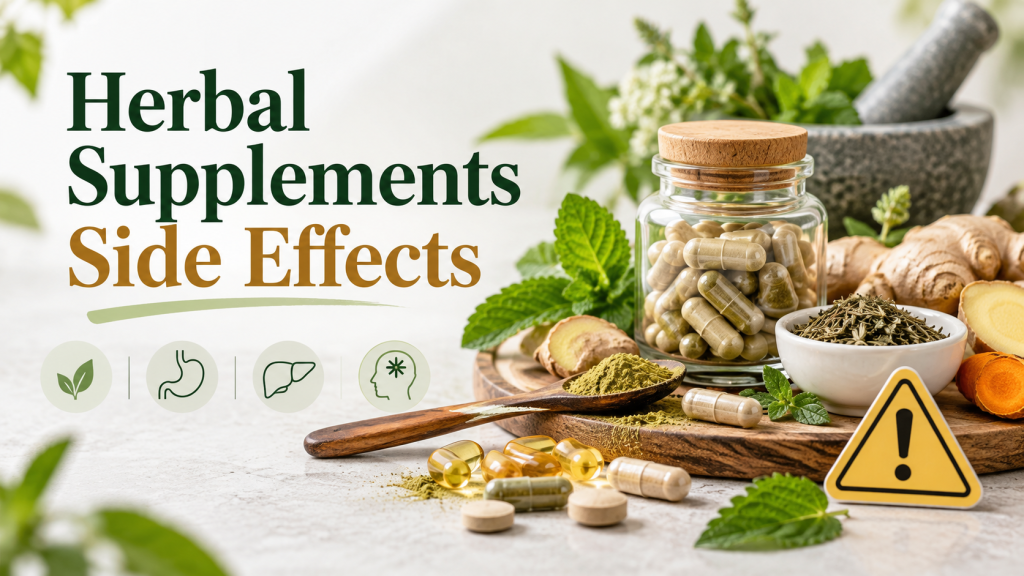
A capsule made from plants can still alter blood clotting, interfere with prescription medicine, or cause a serious allergic reaction. Understanding herbal supplements side effects starts with knowing what is inside the product, who should avoid it, and which symptoms deserve prompt medical attention. This guide translates the evidence into a practical safety checklist you can use before buying or taking any botanical supplement.
Figure 1. “Natural” describes an ingredient’s origin, not proof that it is harmless.
What are the main risks of herbal supplements?
Herbal supplements can cause stomach upset, allergic reactions, liver injury, abnormal bleeding, changes in blood pressure or blood sugar, and harmful interactions with medicines. Risk depends on the ingredient, dose, product quality, individual health conditions, and combination with other substances. Severe symptoms require urgent medical care.
This information is educational and is not personal medical advice. Do not stop prescribed medicines or start an herbal product to treat a condition without qualified clinical guidance.
The essential safety tools: what to prepare before taking a supplement
Unlike a home-improvement project, supplement safety is not a do-it-yourself dosing exercise. Your “toolkit” is an accurate record of ingredients and a reliable clinician or pharmacist who can check risks. Costs below are approximate Pakistani rupee planning ranges, not verified current market quotes.
| Tool or material | Purpose | Estimated cost (PKR) | Skill level |
| Phone photo of front/back label | Capture ingredients, dose, batch and claims | 0 | Beginner |
| Current medicine list | Reveal prescription and OTC interactions | 0 | Beginner |
| Symptoms and timing journal | Document changes objectively | 0–500 | Beginner |
| Pharmacist/clinician review | Assess individual risks and precautions | Varies by provider | Professional |
| Verified product batch documentation | Check traceability and quality claims | Often free to request | Intermediate |
| Relevant lab tests only if ordered | Investigate suspected injury or disease | Variable | Professional |
💡 Quick Hack: Save all front-and-back label photos in one phone album named “Supplements.” It makes an interaction review faster and reduces the chance of forgetting an ingredient.
10 hidden risks worth checking before your first dose
1. Dangerous interactions with prescription medicines
Botanicals can change how a drug is absorbed, transported, broken down, or eliminated. St. John’s wort is a particularly important example: it can reduce the effectiveness of some medicines, including certain contraceptives, antidepressants, HIV medicines, and transplant drugs. Other combinations may increase bleeding or sedation.
Action: Hand a pharmacist the exact product label along with a complete list of prescriptions, OTC medicines, and other supplements. Ask whether the combination is safe and whether monitoring is needed.
2. Liver injury that may appear after repeated use
Liver toxicity is uncommon for many herbs, but it can be serious. Some concentrated botanical extracts and multi-ingredient mixtures have been linked to liver injury; individual susceptibility, dose, and contamination complicate prediction. Warning signs include dark urine, yellow skin or eyes, unusual fatigue, nausea, and pain on the upper right side of the abdomen.
Action: Stop the suspected supplement and seek urgent medical assessment for jaundice, dark urine, or significant illness. Keep its package for the clinician.
3. Excess bleeding or altered clotting
Certain supplements may affect platelet function or clotting, particularly when combined with medicines such as warfarin, aspirin, or other blood thinners. Ginkgo is frequently discussed in this setting. Evidence varies by product and combination, so do not assume every anecdote represents a proven interaction.
Action: Ask about bruising, nosebleeds, black stools, or blood in vomit; these can indicate bleeding. Never change a prescribed anticoagulant without a clinician.
4. Allergies, rashes, and breathing problems
Plant ingredients may trigger itching, hives, swelling, wheezing, or other immune reactions. Products combining many herbs make the culprit harder to identify. Cross-reactivity and excipients such as dyes or fillers can also matter.
Action: For swelling of the tongue or throat, breathing difficulty, or faintness, seek emergency care immediately. For a mild rash, stop the product and ask a clinician for advice before re-exposure.
5. Blood pressure and heart rhythm effects
Licorice-containing products can raise blood pressure and lower potassium when taken in substantial amounts, particularly in susceptible individuals. Stimulant-like herbal blends may cause palpitations or worsen anxiety and sleep. The presence of heart disease or certain medications can amplify the risk.
Action: Check for licorice root and stimulant ingredients; consult your clinician if you have hypertension, arrhythmia, or take heart medicines.
6. Blood sugar changes and hypoglycemia
Some botanical ingredients may affect glucose handling. A supplement promoted for “sugar balance” can cause problems when combined with diabetes medication, especially if meals are skipped or the dose changes. Evidence for effectiveness often remains limited even when biological effects are plausible.
Action: If you use glucose-lowering medicine, agree on a monitoring plan with your clinician instead of experimenting with doses.
7. Sedation and impaired coordination
Products marketed for sleep or stress may cause drowsiness and interact with sedatives, alcohol, or other agents that affect the central nervous system. This can increase falls, driving hazards, and confusion. Effects differ by ingredient and concentration.
Action: Avoid driving or operating machinery if impaired; do not mix calming supplements with sedating medicines unless a professional has checked the combination.
8. Contamination, hidden drugs, and incorrect labels
Some supplements have contained undeclared pharmaceutical ingredients or contaminants. Products marketed for rapid weight loss, sexual performance, or muscle building deserve particular scrutiny. A label alone cannot prove that every batch matches its promises.
Action: Prefer traceable manufacturers and independent quality verification where available. Skip products making extreme “instant cure” claims.
9. Excessive dosing from concentrated extracts
A powder, tea, tincture, and high-strength extract are not interchangeable. “500 mg” of an extract is not necessarily equivalent to 500 mg of dried herb. Multiple products can duplicate an ingredient, while long-term use may expose the consumer to cumulative effects.
Action: Check the standardization information and all overlapping ingredients. Never convert a research dose into a personal dose without clinical context.
10. Pregnancy, breastfeeding, surgery, and vulnerable health conditions
Safety studies for many herbs are inadequate during pregnancy and breastfeeding. Children, older adults, people with kidney or liver disease, and surgical patients may face additional risks. Some products can change clotting, sedation, or medication response around procedures.
Action: Disclose every product before surgery, during pregnancy planning, and when managing chronic disease; ask your care team which products to avoid and when.
Figure 2. Always review supplements alongside prescription and over-the-counter medicines.
A practical six-step safety check before using any herbal product
Step 1: Define the health goal before choosing the product
Write down the specific symptom or goal, its duration, and what improvement would mean. If the issue could indicate a disease—such as persistent exhaustion, recurrent pain, or unexplained weight change—seek assessment rather than masking it with a supplement. Ask whether a dietary change, sleep plan, or established treatment has better evidence.
Step 2: Read the complete ingredient panel
Record the common and botanical names, plant part, extract ratio, standardization claim, amount per serving, suggested serving count, and all non-active ingredients. Check for proprietary blends that hide the individual component amounts. Search the ingredient rather than trusting a broad marketing category like “detox.”
Step 3: Build a single combined medication record
List prescribed medicines, occasional painkillers, cough or allergy medicines, vitamins, traditional preparations, herbal teas, and energy products. Include doses and how often they are actually taken. This is crucial because a pharmacist cannot evaluate what they do not know you are using.
Step 4: Screen for personal risk factors
Note pregnancy or breastfeeding, surgery dates, allergies, liver or kidney conditions, blood pressure problems, diabetes, clotting disorders, and any prior medication reactions. Ask a clinician whether baseline or follow-up assessment is needed; routine blood tests are not required for every supplement.
Step 5: Verify the seller, manufacturing details, and claims
Look for a legible manufacturer identity, ingredient quantities, batch number, expiry date, storage instructions, and a way to report adverse reactions. Third-party verification may improve confidence that the label matches the contents, but it does not establish clinical benefit or universal safety.
Step 6: Decide together, then track only what matters
If a healthcare professional agrees the product is appropriate, follow the agreed instructions and document the start date, exact product, intended benefit, and symptoms. Reassess whether any meaningful improvement occurred. Do not continue indefinitely just because a bottle claims “maintenance.”
💡 Quick Hack: Copy the supplement’s ingredient list into a single note and use the same note at every clinic visit. A consistent list is more useful than telling each clinician only about the product you take most often.
Figure 3. Check ingredients, quantities, directions, batch details, and manufacturer traceability before purchase.
A quick comparison of common supplement categories
| Category / example | Main concern | Safer next step |
| St. John’s wort | Major medication interactions | Pharmacist review before considering |
| Ginkgo | Potential bleeding concern with some combinations | Review blood thinners and surgery plans |
| Licorice root | Blood pressure / potassium changes | Avoid unsupervised use with hypertension |
| Kava | Potential serious liver toxicity | Discuss alternative approaches |
| Concentrated green tea extract | Rare but significant liver injury reports | Differentiate beverage from concentrated extract |
| Ashwagandha | GI symptoms, sedation; rare liver injury reports | Check thyroid, liver and medication history |
| Multi-herb “detox” blends | Unclear exposures and exaggerated claims | Prefer transparency; avoid cure claims |
These are screening examples, not a definitive ranking of danger. Ingredient identity, preparation, individual health, and other treatments change the risk assessment.
Five beginner mistakes that create avoidable risks
Mistake 1: Assuming plant-based automatically means safe
Natural toxins exist, and a strong pharmacological effect can also mean side effects. Judge the evidence for the exact preparation—not the origin story.
Mistake 2: Combining several products with similar claims
A sleep blend, “stress support” pill, and herbal tea may share sedating herbs. Compare all labels side by side before using any combination.
Mistake 3: Ignoring medication interactions because the supplement is sold without a prescription
Over-the-counter access does not mean interaction-free use. Even medicines used occasionally can matter.
Mistake 4: Trusting testimonials instead of reliable evidence
A review cannot tell you whether the product caused a benefit or whether the batch was contaminated. Look for dependable clinical studies and quality testing.
Mistake 5: Treating side effects by adding more supplements
Adding a second product may obscure the cause and worsen the reaction. Seek appropriate care; avoid self-treating a suspected serious reaction.
Advanced safety strategies and money-saving decisions
Pro-Tip: Spend your budget on a pharmacist interaction review before buying several expensive products. Preventing a harmful combination often brings more value than upgrading packaging or chasing a premium-sounding blend.
💡 Quick Hack: Use a 30-second “three claims” test. If a product promises rapid weight loss, cures multiple unrelated diseases, and has no transparent ingredient amounts, leave it out of your basket.
Pro-Tip: Ask a seller for batch-specific quality information, not just a generic logo. If a certificate is provided, verify the laboratory identity, product name, batch number, and scope of testing.
💡 Quick Hack: Photograph the seal and batch number when opening a product. In the event of a problem, those details can help a clinician, manufacturer, or regulator investigate.
Pro-Tip: Compare the cost per clearly labeled serving rather than the sticker price per bottle. A low-cost bottle with undisclosed quantities is not automatically a better value.
Pro-Tip: Keep your safety checklist in Urdu or the language your family actually uses. Clear names and instructions matter more than complicated medical vocabulary.
Troubleshooting: what to do when something goes wrong
Figure 4. Escalate potentially serious symptoms; do not try to diagnose a reaction from a photograph.
If you develop mild nausea, headache, or stomach upset
Do not automatically assume the product is safe or responsible. Note the timing, any food or medicines taken with it, and whether symptoms are recurring. Stop the suspected product and contact a qualified professional for guidance, especially if symptoms persist. Do not restart a suspected product simply to prove causation.
If a rash, swelling, or breathing problem develops
Hives may signal allergy; airway swelling, wheezing, faintness, or rapidly worsening symptoms require emergency care. Do not wait for an online remedy to work. Bring the product container or a clear label photo to the treating team.
If you notice dark urine, yellow eyes, severe abdominal pain, or unusual bleeding
Seek urgent medical evaluation because liver injury or bleeding may be involved. Tell the clinician the first and last dates of use and the full ingredient list. You may need tests chosen by the treating professional; this article cannot determine the correct tests or treatment.
If a supplement seems to stop your medicine working
Contact the prescribing clinician or pharmacist promptly, particularly with medicines for seizures, transplant rejection, HIV, contraception, anticoagulation, or serious heart conditions. Never compensate by taking extra prescription medicine on your own.
Long-term maintenance: reassess the need, not just the bottle
At periodic health reviews, ask whether the original problem still exists, whether objective benefit was observed, and whether the supplement remains appropriate. Update the product list whenever a medicine changes or surgery is planned. Keep products in their original containers, away from heat and moisture, following the label’s storage instructions.
💡 Quick Hack: Set a calendar reminder to review your supplement list before a planned doctor’s visit. This is a medication-safety review, not a reminder to keep purchasing.
Figure 5. The safest routine is transparent, reviewed, and regularly reassessed.
How to evaluate evidence without being misled
When researching herbal supplements side effects, distinguish a published human clinical trial from a laboratory experiment or a customer testimonial. Cell and animal studies can suggest mechanisms, but they do not automatically establish safe human doses, useful outcomes, or long-term protection.
A trustworthy article identifies its population, preparation, comparison group, outcomes, and limitations. A study involving healthy adults may not apply to an older person with kidney disease. Products with the same common herb name may use different plant parts, extraction processes, and concentrations.
To research herbal supplements side effects efficiently, search the full Latin plant name together with the words “clinical trial,” “adverse events,” and “drug interactions.” Prefer government evidence summaries and systematic reviews. Be particularly skeptical of sites that sell the exact cure they claim to prove.
When a traditional preparation is different from a capsule
A culinary amount of spice in food, an infused tea, and a standardized extract can deliver very different exposures. Heating, extraction solvent, preparation time, and serving size affect what ends up in the final product. Never assume that a food ingredient has identical risk at concentrated supplement doses.
Some discussions of herbal supplements side effects incorrectly compare a cup of tea directly with high-strength capsules. A meaningful comparison starts with ingredient identity and measurable quantities. Product labels should let the reader recognize both the plant part and the amount actually consumed.
Specific safety considerations for households in Pakistan
Consumers purchasing from local shops, social media sellers, or international marketplaces should inspect packaging and traceability with equal care. Storage in hot conditions, broken tamper seals, poor translation, and missing batch codes can make an otherwise appealing purchase harder to assess.
Families evaluating herbal supplements side effects should keep a shared medicine list for older relatives, especially where multiple clinics prescribe treatment. Include traditional products, syrups, tonics, powders, and occasional pain relievers. A complete list is more useful than separating “English medicine” from “natural remedies.”
Ask the retailer or manufacturer for the responsible business name, manufacturing and expiration dates, customer support contact, and batch information. Seek confirmation of any relevant local registration from official sources rather than relying solely on a badge printed on the carton.
What your pharmacist needs to know
A productive consultation about herbal supplements side effects starts with accurate details, not a broad question such as “is this herb good?” Explain the health goal, prior reactions, exact serving, and who recommended the product. Mention all diagnoses even when they seem unrelated to the supplement.
Bring photographs of every panel of the bottle and record when the product was started. Ask which interactions are established, which are theoretical, what warning symptoms matter, and whether a simpler or better-studied option exists. Uncertainty is a legitimate answer when published evidence is limited.
If herbal supplements side effects are suspected, write a short timeline: first dose, symptoms, other medication changes, meals, and the last dose. A clinician can decide whether the pattern supports a reaction or suggests an unrelated illness. Do not conduct a repeat-dose challenge yourself.
Finally, remember that herbal supplements side effects may appear after product changes rather than immediately after first use. A manufacturer, batch, formula, dose, or co-prescribed medication can change the overall picture. Review the ingredient list again whenever a package looks different.
Frequently asked questions about supplement safety
Are herbal supplements safer than prescription medicines?
Not necessarily. Some herbs have meaningful physiological effects and limited safety evidence. Prescription medicines are studied and regulated under different frameworks; the appropriate comparison is the specific product and its evidence, not whether it is “natural.”
Can herbal supplements damage the liver?
Yes. Certain botanical preparations have been linked to liver injury, although the likelihood varies. Jaundice, dark urine, severe fatigue, and abdominal pain warrant prompt medical attention.
Which herbal products interact with blood thinners?
Ginkgo and other botanicals can raise interaction concerns, while the clinical evidence differs across herbs. Anyone using warfarin or another anticoagulant should request a professional interaction check before starting an herbal product.
Should I stop supplements before an operation?
Tell the surgical and anesthesia teams about every supplement as early as possible. They will decide whether and when a product must be stopped based on the procedure, herb, and medical situation. Do not guess a universal stopping interval.
Are herbal products safe during pregnancy or breastfeeding?
Safety data are inadequate for many products, and “traditional use” is not proof of safety for a developing baby. Ask a qualified maternity clinician before use and avoid self-medicating with concentrated herbal preparations.
How can I tell whether a herbal supplement is genuine?
Check manufacturer contact information, complete ingredients, expiration and batch codes, packaging integrity, and applicable regulatory details. Independent testing can add confidence about contents, but quality seals do not prove a product treats disease.
Conclusion: make safety part of every purchase
Understanding herbal supplements side effects does not mean every herb is harmful. It means judging each product by its ingredients, evidence, quality, interactions, and fit for your health situation. Keep a complete supplement list, challenge dramatic health claims, and ask for professional advice when medicines or medical conditions are involves.